Monday, August 25, 2014

Harper's Reign Of Terror - A Closer Examination


While Stephen Harper's attacks on charities have been followed here and elsewhere, the Star presents a good overview of how the offices of the CRA have been subverted by a vindictive regime that brooks no opposition to its neoliberal agenda.

The article begins with the egregious case of CoDevelopment Canada, a small Vancouver charity that works with its Latin American partners in helping to fund programs that assist the poor. Apparently, if that assistance threatens to upset the corporate status quo, a crime has been committed in Harperland.

One of CoDev's Latin American partners is the Maria Elena Cuadra Movement for Working and Unemployed Women (MEC), which is based in Nicaragua. MEC’s goals include helping to modernize labour relations in Nicaragua’s free-trade zones by promoting the notion that human, labour and gender rights for workers must be upheld.

In 2013-14, CoDev and its Canadian partners sent MEC nearly $38,000. The money was used for causes such as MEC’s legal clinic, which that year handled 2,000 cases — 1,600 involving women — pertaining to issues such as labour-rights violations and gender-based violence.

Previously, the charity vigorously opposed Ottawa’s decision to sign a free-trade agreement with Colombia, a country [Barbara] Wood [CoDev’s former executive director,] describes as having “massive displacement and violence.’’

Wood muses about whether CoDev’s criticism of the government played a role in putting it on CRA’s radar.

Consider the tale of CoDev's two audits. Their first, in 2009, was a relatively innocuous affair:

The auditor came for about four days to the group’s small second-floor office in east Vancouver on June 10, 2009. A few glitches were spotted. For example, CoDev had been reporting some of its money in the wrong boxes on its tax returns, and filing cabinets in the charity’s office containing donor information weren’t being locked.

Case closed, right? Not quite. In 2012, 'Uncle' Joe Oliver, then Natural Resources Minister, in an open letter warned that environmental and other "radical groups" are trying to block trade and undermine Canada's economy.

It wasn't long after this that nonprofits critical of aspects of government policy suddenly found themselves the centre of the CRA's attention. The David Suzuki Foundation, of course, was one of them.

In mid-October, a new audit wass ordered of CoDev, one that began in January of 2013, this one involving three investigators, an auditor and two others whose area of specialty was program funding. They ultimately imposed onerous stipulations on the four-person office, including the translation of all Spanish documents into English. More specific details outlining the Harper-directed CRA vindictiveness can be found here.

Most reasonable people will draw the conclusion that these audits are far from innocent. In the simplistic and bifurcated world of Stephen Harper, you are either with the government or you are with its 'enemies'. If you fall into the latter category, beware the consequences.

Sunday, August 24, 2014

Oh, The Horror!

Words fail me:

Finding Vivian Maier: A Documentary Recommendation


I feel like taking a break from writing about politics today, so I will briefly turn to another of my favorite topics, documentaries, two posts about which I have written in the past.

Like politics, documentaries at their best deal with nature - either the nature that we are part of, or human nature. Today's recommendation deals with the latter, exploring both the life and the work of amateur photographer Vivian Maier, whose prodigious output was discovered only after her death.

Although there remains much to be digitized, many of her pictures can be viewed here. In my mind, her eye is reminiscent of legendary photographer Henri Cartier-Bresson's; both are able to capture those telling moments in life that say so much about us in often subtle, understated ways.

TVO recently showed the documentary Finding Vivian Maier. Here is its introduction:

This fascinating documentary shuttles from New York to France to Chicago as it traces the life story of the late Vivian Maier, a career nanny whose previously unknown cache of 100,000 photographs has earned her a posthumous reputation as one of America's most accomplished and insightful street photographers. When Vivian Maier died in 2009 at age eighty-three, she left behind more than 100,000 negatives of her street photography -images that she'd scarcely shared with anyone. She had spent most of her adult life as a nanny with no spouse, no children of her own and no close ties. Her photographs and belongings were hidden in storage, until the rent came overdue and the facility auctioned them off. They might have vanished into obscurity were it not for the intervention of John Maloof, a twenty six- year-old amateur historian in Chicago, who purchased a box of her unidentified photographs and became obsessed by what he discovered.

You can watch the film by clicking here. If your computer has an hdmi output, I would recommend watching it on your television.

Saturday, August 23, 2014

Explaining Justin Trudeau


No matter what the Liberal leader says or does, his popularity ranks at a consistently high level. While part of the explanation for his standings in the polls surely lies in the Canadian people's weariness with the Harper regime, a regime that has shown itself, through its practices of division, neoliberal politics and fear/hate-mongering, to be unworthy of public office, there must be more to it than that.

Rick Salutin, writing in The Star, offers up an interesting perspective in a piece entitled Paradoxical public art of seeming human. His thesis is that the more a person appears like one of us, i.e., flawed and fallible, the more we will identify with him or her.

He uses as an example the televised debate between Kathleen Wynne, Tim Hudak and Andrea Horwath. Young Tim pretended to be just an ordinary, folksy kind of guy:

“Look, I’m not gonna be the best actor on the stage. I’m not gonna get up here and give a great performance.” It was a rehearsed shtick, a shucks/shtick. He did it with the rictus grin that others — NDP Leader Tom Mulcair, U.S. neo-con Bill Kristol — paste on, presumably because experts tell them they look too stern.

Contrasting that studied 'ordinariness' was Kathleen Wynne, who

sounded bad and looked flustered answering questions on corruption in that debate, but flustered is human, so she also made ground, by contrast with the “human” effects well-prepped by her opponents.

Salutin then examines Trudeau, pere et fils:

Human is human. There’s no formula. Pierre Trudeau looked human by not seeming to give a crap whether anyone cared if he looked human. It was effective.

Now Justin is pulling off the same thing though not in his dad’s way, which would be fatal. He’s warm, ebullient, spontaneous. It seems real, which is as much as we’ll ever know. When he apparently improvised a new anti-abortion policy at a scrum, he looked befuddled by the questions. “Uh, that is an issue that, uh” — then he takes a really long pause as if lost in thought, remembers the press are there, tries again: “I’ve committed in my . . . ” Then cheerily gives up: “Well, it is a tough one.” Says he’ll give it more thought.

While this apparent ineptitude should be reflected in poll results, it is not. Salutin's explanation?

Faced with candidates none of whom is discernibly human, voters will look for something to judge on: sunniness, mellifluousness, square jaw. What the candidates say is never enough since it’s all obviously calculated. But faced with one candidate who’s discernibly human, they’ll tilt in that direction for, well, human reasons. It’s like spying a fellow creature in the wilderness. It may not suffice but it’s a sizable advantage.

The adorable thing about that abortion clip is it could appear in Conservative or Liberal ads: as proof the guy’s in over his head or that he’s a certifiable human.


While electoral behaviour, like all human behaviour, will likely never give up all of its mysteries, Rick Salutin has perhaps provided us with one more tool by which to analyse it.

Friday, August 22, 2014

Wouldn't A Taser Have Been More Appropriate?

I have often thought that had the video evidence not been so strong and graphic in the shooting of Sammy Yatim, the 'official' police story would have been that the disturbed 18-year-old had lunged at officers and thus had to be killed. What the video apparently showed, however, was what many would describe as the execution of a kid who posed no threat to anyone.

Similar video has arisen in the recent shooting of St Louis resident Kajieme Powell, an obviously disturbed man carrying a knife by his side. According to St. Louis Metro Police Chief Sam Dotson, the officers used deadly force due to the suspect with a knife coming within three of four feet of the officers, which would be considered within lethal range.

While perhaps not as definitive as the Yatim video, the following does cast doubt on the official story. Have a look and make up your own mind:


Thursday, August 21, 2014

In Which Pat Robertson Makes Even Less Sense Than Usual

I'm completely stumped by this one from my favorite crazed evangelical:


Cowardly Leadership: We All Pay A Price


As I have written in the past, poor leadership costs all of us dearly. Whether looking at local provincial, federal or international politics, the price we pay for leadership that has too high a regard for itself and too little for the people is moral, social, economic and military disarray. Whether we are talking about rampant cynicism with regard to the political process, the demonization of groups within society, the dodging of taxes or the kind of demagoguery that leads to war, all, at least in part, can be tied to defects in leadership. It seems that so many want power, but so few are willing to accept the real burden of responsibility that comes with that power.

Recently, at Northern Reflections, Owen wrote a post on Gerald Caplan's assessment that the conflict between the Israelis and the Palestinians will likely never be resolved. I wrote the following comment:

I fear that Caplan's assessment is depressingly accurate, Owen. While some good but unlikely things have happened in the world, such as the ending of apartheid in South Africa, that achievement palls when compared to the deep-seated and abiding hatreds that seem to prevail in the Middle East and consume so many.

Owen replied: South Africa had Mandela, Lorne. There appears to be no Mandela in the Middle East.

Neither does it have someone like Bishop Desomond Tutu, long a brave warrior in the long march against apartheid, and a man never afraid to enter the lions den, as he did recently in Fort McMurray, where he called the oilsands products “filth” created by greed.

Tutu is showing a similar fearlessness in offering his strong views on Israel's behaviour vis–à–vis the Palestinians in Gaza. Writing in Israel's oldest daily newspaper, Haaretz, the social activist, Nobel Peace Prize winner and retired bishop is unsparing in his assessment of the situation, and is calling for a boycott of any company profiting from the occupation of Gaza:

Over the past few weeks, more than 1.6 million people across the world [have joined] an Avaaz campaign calling on corporations profiting from the Israeli occupation and/or implicated in the abuse and repression of Palestinians to pull out. The campaign specifically targets Dutch pension fund ABP; Barclays Bank; security systems supplier G4S; French transport company Veolia; computer company Hewlett-Packard; and bulldozer supplier Caterpillar.

But the heart of what Tutu writes about is hope, not punishment. Drawing upon the Sourth African experience, he says:

We know that when our leaders began to speak to each other, the rationale for the violence that had wracked our society dissipated and disappeared. Acts of terrorism perpetrated after the talks began – such as attacks on a church and a pub – were almost universally condemned, and the party held responsible snubbed at the ballot box.


The real triumph of our peaceful settlement was that all felt included. And later, when we unveiled a constitution so tolerant, compassionate and inclusive that it would make God proud, we all felt liberated.

Of course, it helped that we had a cadre of extraordinary leaders.


The role the boycotts and divestments played in the ending of apartheid, says Tutu, could have the same benefit for Israel and Gaza:

The reason these tools – boycott, sanctions and divestment – ultimately proved effective was because they had a critical mass of support, both inside and outside the country. The kind of support we have witnessed across the world in recent weeks, in respect of Palestine.

My plea to the people of Israel is to see beyond the moment, to see beyond the anger at feeling perpetually under siege, to see a world in which Israel and Palestine can coexist – a world in which mutual dignity and respect reign.

No one can be truly free until everyone is free. The people themselves need to look beyond their leaders and make their voices heard loud and clear. That seems to be the message Desmond Tutu is trying to deliver to this very troubled region of the world.

Wednesday, August 20, 2014

Sorry, I've Been Kinda Busy...

That must be the reason that people like Transport Minister Lisa Raitt and her parliamentary secretary Jeff Watson haven't yet had time to read the Transportation Safety Board's damning report on last year's Lac-Mégantic train derailment that killed 47 people:


Pros and Cons


Following up on Rona Ambrose's stout denial that the government's planned anti-marijuana campaign has anything to do with trying to undermine Justin Trudeau, along with Canadian doctors refusing to be part of a campaign that has become, as they describe it, political messaging, here are the perspectives of two National Post readers:

Re: Health Canada Doesn’t Endorse Medical Use Of Pot, Ambrose Says, Aug. 19.

The time for legalizing marijuana is long overdue. It strikes as more than a little hypocritical that the politicians in this country spend our tax dollars to bewail the evils of pot, while alcohol is given a free pass on being socially acceptable.

It would be interesting to compare the harms caused by alcohol and marijuana. Should we start with tallying vehicular injury and death? Then we could calculate which substance contributes more to violent crime. Then look at which is more likely to cause social ills, such as broken families and spousal abuse. Then we could also measure the medical costs incurred on the health system by both substances.

Every state in the U.S. that has fully legalized marijuana has reported only positive results — socially and economically. It is time that the politicians and the people benefiting from this draconian system of prohibition accept the facts.


Robert Fitzpatrick, Sicamous B.C.

Playing politics

By refusing to take part in a Health Canada anti-drug campaign that will target young people, the doctors are showing their political bias in favour of Liberal leader Justin Trudeau, who supports legalizing marijuana use. Can’t they see that they have allowed their politics to prevent their informed opinion on discouraging marijuana use to be propagated?

Jiti Khanna, Vancouver.

Tuesday, August 19, 2014

Denial And Outrage


During my teaching career, it was occasionally my unpleasant task to confront a student with evidence of his or her cheating; most situations revolved around plagiarizing essays or having skipped a test. The student's responses when confronted were invariably the same; indeed, they tended to parallel Elizabeth Kubler-Ross' five stages of grief.

I won't bore you with the details, but common initial reactions were denial that any offence had occurred, ("I have no idea what you are talking about"), and when that failed, anger that I would harbour such unfounded and unworthy suspicions ("I am really hurt that you would accuse me of such a thing"). Invariably, they were guilty as charged.

There seems to be an analogous system at work in politics.

Let's start with the Harper regime's upcoming campaign against marijuana use, the one that the three main groups representing doctors, Family Physicians of Canada (CFPC), Canadian Medical Association (CMA) and the Royal College of Physicians and Surgeons of Canada have refused to be part of because they "... do not, support or endorse any political messaging or political advertising on this issue".

The accusation that the campaign has become a political football aimed at discrediting Justin Trudeau, who favours legalization of pot, has been hotly denied by Health Minister Rona Ambrose:

“Telling kids to not smoke pot is not a partisan attack on Justin Trudeau by Health Canada,” Ambrose told a news conference Monday on the sidelines of the annual Canadian Medical Association meeting.

“It is a sound public health policy backed by science. Whether pot is legal or illegal, the health risks of marijuana to youth remain the same, and we should all be concerned about them.”

She added that Trudeau “made this a political issue.”


Denial and shifting the blame, both time-honoured tactics of my former wayward students.

Next, the anger:

This morning's Star reports the following:

The federal New Democrats are hoping to put the Canada Revenue Agency under the microscope Tuesday after recalling a House of Commons committee to examine a wave of audits against registered charities.

NDP MP and revenue critic Murray Rankin (Victoria) has questioned whether the audits were politically motivated actions against those advocating for environmental causes and other issues clashing with the Harper government’s policies.


However, Revenue Minister Kerry-Lynne Findlay rejects the allegations, and with great umbrage:

“Your baseless allegation that I have used my office to blatantly misappropriate CRA resources to target and intimidate charities that don’t agree with our government’s policies is absolutely reprehensible,” wrote Findlay in a letter to Rankin, dated Aug. 5.

“As an honourable parliamentarian, I find your unwarranted attacks on the integrity of the CRA and my office shameful and plunges parliamentary discourses to new lows.”


To quote from my favourite Shakespearean play, "The lady doth protest too much, methinks." Such indignation may play well to the party's base, but critical thinkers may wonder at the rhetorical flourishes employed by Ms. Findlay here.

The final stage in the five stages of grief is acceptance. For the Harper regime, I suspect that will only come after the results of the next election.

Monday, August 18, 2014

Our Poisoned Political Culture


Whether true or not, Canadians can, I think, be forgiven for wondering, quite seriously, whether the Harper cabal was somehow involved in the ominous break-in at Justin Trudeau's home while his family was asleep. A destabilizing and disturbing crime for anyone who has experienced such a violation, it is clearly weighing heavily on the Liberal leader, who must be away from his family for extended periods of time. That may be the intended effect.

Perhaps Harper and his acolytes had nothing to do with it, but entertaining such suspicions is surely not unwarranted owing to the pernicious and poisonous political culture that has been so avidly cultivated by a Prime Minister whose only purpose seems to be the perpetuation of his party's power. Assaulting character, instilling fear in critics of his neoliberal agenda, presenting the world in absolutist terms are all of a piece in a scorched earth policy that amply demonstrates Harper's unfitness for public office.

Unfortunately, we all become the victims when public policy is designed only to benefit a select few.

Writing yesterday in The Edmonton Journal, Michael Den Tandt offered this headline:

Reaction to Justin Trudeau break-in a symptom of debased debate

Den Tandt observes that the Twitter reaction to the break-in was often cruel and insensitive:

On Twitter – home to all important Canadian political debate now that Question Period in the Commons has become a set piece – some revelled in the news. Hug-a-terrorist Justin Trudeau, targeted by home-invading thugs; what fun! There were Tweets mockingly tying the break-in to Trudeau’s stance on marijuana. Maybe the burglars were after pot! Ho ho. Others tried, clumsily and with the hackneyed spelling so common in Twitter’s nether parts, to be sardonic.

And to be fair, the writer also castigates the Harper-haters for their own frequent vileness which, he says, neither the Liberal nor the NDP Party has done anything to quell.

Yet he lays the primary responsibility for the devolution in political discourse squarely at Harper's feet:

The Conservative party has since April of 2013 indulged in organized mockery and vilification, aimed at Trudeau personally. The intent of this messaging is to belittle and demean. That is not something the Conservative party can disavow. Nor can they deny that their attack ads – against Trudeau, and predecessors Bob Rae, Michael Ignatieff and Stephane Dion — have contributed to a debasing of Canadian political dialogue. Debasement is the whole point of the ads.

Den Tandt offers some remedial suggestions:

To begin, the prime minister, to whom all Canadians look for leadership, could ditch the stupidest of his party’s attack ads and begin speaking positively, regularly and publicly about how he hopes to build a better country.

[A]ll the parties, their MPs and officials could aggressively block their own partisans who engage in personal debasement in social media. The standard should be the law against defamation.

[O]nline anonymity, in social media and news comment streams, should be abolished. That is a step that publishers can take.

These are all good suggestion, but given the extent of the rot that has set in and accelerated in recent years, I think we can realistically expect nothing to change.

About Those Taxes...


Responding to the latest propaganda piece about taxation levels from The Fraser Institute, Star readers weigh in with their own perspectives, one of which includes taking the paper to task for publishing news of the report with no critical comment:

Re: Families pay more for taxes than basics, Aug. 13

This report of a study from a conservative think tank could be a verbatim quote from the authors’ press release, with no editorial comment or critical opinions included. The Star does us a disservice (and, rather atypically, gives the conservative cause a boost) by publishing it in this fashion.
Other news sources (the CBC, for example) discussed the study in the context of criticisms, such as the fact that the base year 1961 was at the very beginning of Medicare and before state pension plans were instituted, not to mention many other lifestyle shifts that have taken place over the 52-year gap of the selected comparison.

The report as cited by the Star sounds more inflammatory than instructive.


Eleanor Batchelder, West Toronto


The Fraser Institute just confirms what most Canadians already know — their disposable incomes are either stagnant or decreasing while their taxes are constantly going up.

What most Canadians don’t realize is that while their taxes have been steadily increasing over the years, the corporate tax rates have been coming down. Corporate lobbies pushed our government to implement policies that catered to businesses and corporations at the expense of consumers. And the tool that successive Canadian governments used to implement the corporate agenda was taxation.

In the 1960s the federal corporate tax rate was 40 per cent. This rate has been whittled down by successive Liberal and Conservative governments. Today it is 15 per cent — the lowest in all of the G8 countries. But for consumers, taxes went up.

To make up for revenue lost from the discontinued 10 per cent manufacturing tax, paid by manufacturers only, the federal government’s GST is effectively paid by consumers. And with the added HST, Ontarians have to pay 13 per cent tax on almost every product and service they buy. This is on top of increases to income taxes, property taxes, health, vehicle, alcohol and tobacco taxes.

This massive shift in tax burden from corporations to individuals is the reason that Canadians are spending more on taxes than food, shelter and clothing and why most of us feel that we are going backwards rather than forward in terms of our disposable incomes.


Michael Poliacik, Toronto

Sunday, August 17, 2014

Climate Change Adaptation

As the effects of climate change become more pronounced, adaptive measures will need to be taken alongside of measures ameliorating the rate of change (if that is in fact still even possible).

One such step has been undertaken in California, a state that has been especially hard hit by drought. Orange County has undertaken an ambitious waste water recycling regimen that will likely become the norm in other parts of the country and world facing similar conditions.


Mission Accomplished.

Heh, heh, heh, heh, heh.....


H/t Canadians Rallying to Unseat Stephen Harper

Saturday, August 16, 2014

Where Do People Stand In The Harper Hierarchy?


The answer would seem to be, "Nowhere near the top." As discussed in yesterday's post on CETA, leaked documents confirm that Canadian sovereignty, something all citizens should have a right to expect, will continue the erosion that began under NAFTA. Specifically, the dispute-settlement mechanism that enables investors to sue governments when they pass legislation that impairs their ability to make profits (as in environmental regulations, drug regulation, etc.) will be a centre-piece. As well, Canadian governments on every level will see their efforts to locally source good and services severely curtailed.

The corporate state has clearly arrived.

But its arrival affects other areas of our lives, not the least of which is public safety. Industry self-regulation has accelerated under the Harper regime, in part a response to trade liberalization but also a reflection of an ideology which believes government involvement in the affairs of state and commerce should be minimal. Hence the disasters of Walkerton, Maple Leaf Foods, etc. Air disasters, god forbid, seem likely in the future as well due to changes at Transport Canada.

Then of course, there was the entirely preventable tragedy of Lac-Mégantic, which recently observed the one-year anniversary of the deaths of 47 people and the destruction of a significant portion of the town.

Despite those grievous losses, third-party proprietary rights are being invoked as the reason we Canadians cannot know the specifics of that massive failure of safety. As reported in today's Toronto Star, the paper's access-to-information requests resulted in only some information being released:

Safety inspections of the rail company implicated in the Lac-Mégantic train disaster found defective equipment, problems with locomotives, and sections of rail lines so rundown trains could not exceed speeds of 10 miles per hour.

But Transport Canada is blocking the release of information detailing the majority of the problems and their severity, saying the inspection reports cannot be provided in full because the information is “third-party” — confidential, and belonging to the rail company — or was prepared or obtained in the course of an investigation.

[T]he majority of the more than 1,000-page compilation of inspection documents was withheld or heavily censored.

These inspections, by the way, were not performed by Transport Canada, but by the railway company's own crews.

The unredacted portion received by The Star is damning enough:

- employees told investigators the company was using poorly maintained locomotives, and that instead of repairing worn train tracks, ... the company just lowered the speed limit.

- the company performed minimal maintenance on locomotives, and said locomotive 5017 (the one that caused the disaster) was in particularly poor condition.

- Transport Canada repeatedly flagged safety concerns and non-compliance with rail standards by the now-defunct company

Equally disturbing is the fact that the rail companies establish their own safety management protocols:

The arrangement allows rail companies to draft and enforce their own safety regimes, which are then audited by Transport Canada. And that, ladies and gentlemen, is considered third-party proprietary information, and hence the embargo on truth about the disaster.

All Canadians should be outraged by yet another failure on the part of the Harper regime to protect its citizens while simultaneously extolling and elevating the world's corporate denizens.

Friday, August 15, 2014

A Public Service Announcement From The Conservative Party Of Canada

Given the Harper regime's new-found zeal for warning all of us about the dangers of marijuana, and, coincidentally, the equally dangerous potential of a Justin Trudeau-led government, perhaps the following will help them to bring home the dangers of both:


H/t Patrick Clarke

Praising Stephen Harper


Now that I have your attention, let me assure that I am not the source of that praise. No, a site called Breaking Israel News is. Drawing heavily upon a piece written by the Ottawa Citizen's Mark Kennedy, it offers the following effusive approval of Stephen Harper:

The support he has shown for Israel has been absolute and unwavering for the entirety of Harper’s career, so much so that it has spread to many others within the political and social hierarchy of Canada.

For his support, Harper became the only foreign dignitary to have received the Key to the Knesset and who was termed as a true friend of Israel by Prime Minister Benjamin Netanyahu.

Kennedy accurately explained that Harper stressed that conservatives understood “the notion that moral rules form a chain of right and duty, and that politics is a moral affair,” unlike the “modern left” — which had adopted a position of “moral neutrality”.

Harper fully believes that it is in Canada’s and the rest of the western world’s best interest to support Israel and to do what is morally right. After all, the only state in the Middle East that shares the same fundamental values which Canada’s conservative party stands for is Israel. And as Harper said in 2003, “Conservatives must take the moral stand, with our allies, in favour of the fundamental values of our society, including democracy, free enterprise and individual freedom.”

There is a comments section at the end of this propaganda exercise. The majority are along the following lines:

Praise God for Prime Minister Harper that has the integrity, character and guts to stick by Israel and the Jewish People. Prime Minister Harper is a man of strong faith and is acting on the Bible/Torah where is says I will bless those who bless thee, which speaks about Israel and the Jewish!!!

Thank you Prime Minister Harper for taking a stand and remaining steadfast no matter what is flung at you. And I say Amen to that!

Proud of my Prime Minister.

However, some Canadians have tried to set the record straight about our domestic martinet:

I am sure to be dismissed but as a Canadian, who converted to Judaism long ago, I completely and wholeheartedly disagree with Harper's opinion and staunch support of those who run Israel currently. Zealotry is not appealing in anyway, racism and fascism should not be supported nor condoned.

The current climate and tolerance demonstrated by Israel in no way represents democracy nor freedom. If one were to remove the country of origin from the stories and have them read, there would be few who would support or even justify the actions of the Israeli leaders currently.


Since fair and balanced commentary is always desirable, perhaps some of you might also like to weigh in with your assessment of Mr. Harper. I already have.

And This Is A Good Deal Because?


Despite the best efforts of the ever-secretive Harper cabal, details about the CETA deal are finally emerging thanks to leaked portions of the text. And as has been long-predicted, those details are not encouraging when it comes to Canadian sovereignty in general, and local sourcing of construction contracts, goods and services in particular.

While government websites, replete with encomiums from business entities, crow about what this deal will accomplish, more critical sources offer much to suggest the need for grave misgivings.

Take, for example, the matter of investor rights. Chapter 11, the investor-dispute mechanism under NAFTA, has resulted in numerous suits against the government from companies claiming loss of earnings due to legislation or judicial rulings. One such case involved Eli Lily suing Canada for $500 million over patent rights to two of its drugs. Another involved Lone Pine Resources, which is suing the federal government for $250 million due to Quebec’s moratorium on oil and gas fracking beneath the St. Lawrence River.

Yet the Harper government, in its apparent zeal to cede even more authority to multinational corporations, seems undaunted by these and many other ongoing suits.

With apparently almost identical provisions under CETA, perhaps the direness of the situation is best summed up by Scott Sinclair of the Canadian Centre for Policy Alternatives:

"The outcome of the deal is that corporations win and citizens on both sides of the Atlantic lose."

Equally disturbing is the provision about procurement rights:

The main benefit for Europe is easy to name: Canada opens its public procurements to European corporations. European companies are much stronger when it comes to public tenders because there aren't as many Canadian companies willing to bid in European public procurements.

Today's Star offers more details of the public procurement provisions, and gives this bleak assessment:

The ability of provincial governments and cities like Toronto to boost their economies by favouring local companies on major goods and services contracts will be sharply curtailed under the terms of Canada’s free-trade pact with Europe, leaked details of the agreement confirm.

Specifically, provincial agencies and ministries will have to open up bidding to businesses from EU countries on goods and services contracts worth approximately $300,000 or more.

The threshold is higher for construction contracts: about $7.9 million.

Essentially, the same rules will apply to school boards, [p]ublic agencies or utilities that operate airports, rail or bus transport, marine ports, electricity distribution, drinking water provision or the production of gas and heat.

Once more, Canadian citizens must sit on the sidelines in government-imposed ignorance, thanks in large part to the most secretive government that has ever existed in Canada, Tony Clement's recent hilarious declarations about government transparency notwithstanding.

While it is highly unlikely the CETA deal will be finalized before the next election, given the millimeters of difference that exist between the major parties on most issues, holding an unsanctioned 'faint-hope' clause in our collective psyche may be all we can realistically aspire to.

Thursday, August 14, 2014

Responses To My Previous Post


I am always grateful when people take the time to respond to my posts. Engaging in discussions, exchanging points of view are part of what makes this blog worthwhile. On occasion I like to reproduce comments as separate posts, aware of the fact that often those comments will be missed by readers who generally don't return to read them. In that spirit I offer these responses from Scotian and Simon to my previous post on Justin Trudeau. Both reflect a point of view shared by many of us, that the first priority has to be to get rid of Harper, and that Trudeau's timidity is in part a reflection of the LPC's desire not to provide any ammunition to the Conservatives who, time and time again, have shown their willingness to stoop to any dirty trick to try to sully those who oppose them.

Scotian:

Not that I am wanting to be defending this, as I've already said here I disagree profoundly with this choice of his on this issue, but how much of this is because he knows he cannot afford to give the Harper machine any chance to portray him especially on foreign policy grounds as unserious. Remember the comment I made that you chose to post on your blog? Those forces are no doubt watching Trudeau like a Hawk hoping for just the slightest chance to tear at him so as to let them keep their preferred man Harper in the PMO. So it is possible what we are seeing is as you said bobbing and weaving like in that boxing match, but remember, that serves a real purpose, to stay in the fight until you can deliver your hard punches to win.

I'm not saying I'm happy with this, because I am not. I am though also not going to pretend that as ugly and horrific as things are with Israel and the Palestinians that I am going to make my political domestic judgments in the current reality on them either. I do not know that my view is correct, that Trudeau is saying what he needs to to be able to stay in the fight to beat Harper, and if he is it is something I never like seeing political leaders do, but I won't pretend that there isn't real reason for a leader with Trudeaus limited record to do it on an issue as charged and with as powerful a lobby on one side as we have here.

Even if I am wrong though and he truly believes what he is saying, I am still not going to change my view that letting him become the next PM is still the best choice among the three actually viable options, because while Mulcair may have more experience as a leader the way he operates is not a whole lot better than Harper in my eyes, granted for less destructive purposes. I don't trust those in his team for competence to run a government, I do trust in the institutional experience within the Liberal party though, and that is why I can still support a Lib leader who comes in with as limited experience as Trudeau, especially since he clearly knows how to find quality competent people around him and makes them get the job done. Look at how much he has been able to rebuild the Lib party itself for proof of that.

He is clearly not his father in intellect, but then how many of us are? Is he as developed as I would prefer, no but then I think he himself would say that. He didn't after all, initially want to run for leader this soon, he wanted to build up more experience, the problem was the 2011 results left him with a stark choice, either run now or there quite possibly wouldn't be a Lib party for him to lead when he did have that experience. So I understand your concerns Lorne, and even to a degree share them, but I also keep the context we have in mind too, and I do not believe that Trudeau is so able a leader to run and win his leadership with a 80% first ballot win, then rebuild his party machinery from the ground up, fundraising machinery overhauled as it has been, and not understand that he needs to put out more serious substance, I'm hoping he is biding his time. Too soon as we know what the Harper CPC will do, we've seen that movie already after all. Just ask Dion.

If we were in typical times I could not support a first time leader such as Trudeau, but these are anything but, and I refuse to allow myself to be diverted from the most important short term goal, the removal of Harper and the CPC, and hopefully with enough force to send them to third party status hopefully allowing the Red Tories to take over the CPC and turn it into something sane.


Simon:

I went to see JT in London last year and before the Party nomination precisely because I didn't believe the hype. I was impressed with his poise and knowledge and ultimately decided that he is the real deal. I too, however, feel vaguely disappointed with his public position re: Zion and Gaza.

I fairness though, he is still only a PM in waiting. He is young and inexperienced and has already suffered several beatings at the hands of the CPC bullys precisely for taking firm positions (pro-choice, pot). Since he still has to *win* popular support (and the next election), I think it is reasonable for him to be somewhat more coy about extremely divisive issues.

His head and heart are in the right place. He is a proud Canadian and a champion of this great country and its liberal values. This is the diametric opposite of Harper's Alberta-centric, corporate oil pandering, science-denying, climate-change ignoring, anti-woman, opaque, unaccountable, controversial subterfuge.

I want this young man to lead this country. He'll find his feet.

Cheers, Simon


I replied:

Thanks to both Scotian and Simon for your well-considered comments. I hope you won't mind if I publish both in a separate blog entry, as they provide incisive counter-balances to the views I expressed above.

While I do believe that you are quite right about the dangers being forthright would pose at the hands of the Harper henchmen, I do think there are ways to be fair to both the Gazans and Israelis without alienating the supporters of either side. I wish Trudeau would opt for one of those ways.

Thanks again for taking the time to comment.


To which Scotian responded:

I've got no problems with it, if I did why would I write comments in the first place? LOL

Seriously, it is not like I disagree with you on the preference, but I am also mindful of the fact that Trudeau has only one chance to win here, the moment he makes those "in over his head" ads look credible on any serious issue, however fairly or unfairly, is the moment his and the Lib chances take a serious hit and all that CPC voter support he and the Libs have been pulling away risks returning to Harper. It is not likely they will go to Mulcair and the NDP, they didn't for Layton in 2011 after all. Remember, it is not just he Harper henchmen I fear on this issue, indeed in some ways they would be the pick-up follow-through to the ones I truly fear, who would also give a dangerous credibility to that attack from the Harperites. It is not in the interests of the pro-Israel-at-all-costs lobby to lose Harper, who clearly is the most committed to their POV of all our leaders, and it is they I fear would do the initial damage which then the Harperites could and would exploit.

I think that the political team around Trudeau can see that at least as easily as I can, so I am willing to give them the benefit of the doubt despite my clear distaste for what is said and for the fact that if I am right we have a leader saying one thing while believing another, something I never like seeing in politics from anyone. That said though, we cannot really make any difference in Gaza, especially with Harper as PM, but we CAN make a difference in who is our PM, so that is where I believe our focus must stay, even when we see such ugliness as we have seen over the past several weeks, both in the ME and in our domestic discourse about it.

The hard and ugly truth is Trudeau because of his inexperience as a leader cannot afford to take risks like the one you wished he would, not yet. Once he gains the gravitas as a PM he can, and I would hope will, but for now he needs to keep the foreign policy arena as neutral a space as possible in terms of the difference between him and Harper so as to prevent it being used to undercut his and the Lib chances, and especially so on this issue given the outside/third party lobby interest already referred to.

Believe me Lorne, it turns my stomach to be writing/saying such things, but the last 8 years has been doing that too, and worse. Before anything else can be changed we MUST be rid of Harper and his CPC, and hopefully forcefully enough that his faction loses their grip on the party and the old time Red Tories can take it over and return it to something that actually cares about traditional Canadian values, indeed typical Canadian Conservative values at that.


Justin Trudeau Speaks

But, unfortunately, says nothing.

As I have noted elsewhere in this blog and in comments on others', I have grave misgivings about the Liberal Party under the leadership of Justin Trudeau. Despite the latest EKOS poll showing the party with a commanding lead while the Conservatives continue to sink under the heavy hand of Herr Harper, I cannot escape the notion that Trudeau is superficial, intellectually flaccid, and a political opportunist (the latter quality, of course, putting him in good company with so many others who hold elected office).

Earlier in the week I wrote a post entitled Thomas Mulcair Speaks which revolved around the fact that the NDP leader, likely due to political pressure from within his own party, moved beyond his usual platitudes in discussing the Israeli assault on Gaza that has killed about 2000 innocent Palestinians. In his strongest words yet, he called for an end to the Israeli occupation of Gaza.

Unfortunately, Trudeau has not been moved to make a similar gesture.

In today's Star, Haroon Siddiqui writes the following:

Liberal supporters wondered why Justin Trudeau issued a statement July 15 laying all the blame on Hamas but not calling on Israel to show any restraint. They were further outraged by a solidarity trip to Israel by two Toronto-area Liberal MPs, John McCallum and Carolyn Bennett — paid for by the pro-Israeli lobby group, the Centre for Israel and Jewish Affairs.

Trudeau's response was to give an address Monday in Mississauga that began rather inauspiciously:

About 100 protesters waited for him at the Derry Rd. locale, carrying placards and shouting slogans for more than an hour — “Killing children is wrong,” “End the occupation,” “Occupation is a crime,” etc.

No longer quite the accessible and forthright politician he has been promoted as, Trudeau dodged them to enter the hall where he read a prepared speech.

The speech itself had little substance, his boldest declaration being, “There is no military solution to the crisis that continues to plague the Middle East . . . A safe and secure Israel can only exist when it exists next to a safe and secure Palestinian state.”

According to Siddiqui, the rest was a homily on Canadian diversity. No questions were taken from the floor.

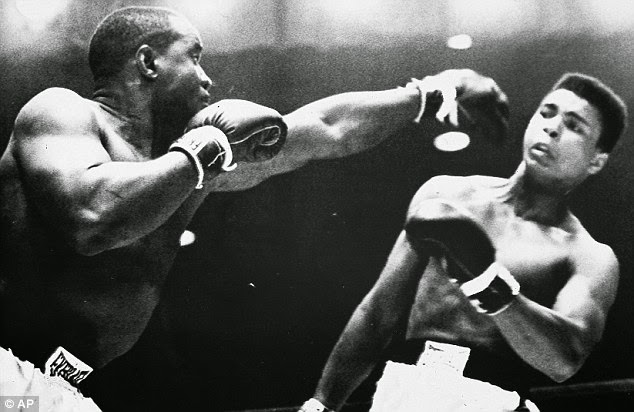
After reading the column, I couldn't help but think of the boxing match in which Trudeau bested Patrick Brazeau. Doubtless there was much bobbing and weaving involved. Perhaps the leader of the Liberal Party has not yet learned that in the political arena, such a strategy will only take you so far.

Wednesday, August 13, 2014

For The Naive, This Sounds Impressive

For the seasoned political observer, it is Harper propaganda of the the worst kind.

Will The Harper Promise Of Tax Breaks Continue To Seduce Canadians?


Recently, Ontario Premier Kathleen Wynne called upon the Harper regime to commit $12 billion annually in infrastructure funding. This request takes on even greater urgency in light of the challenges we are and will be facing as we reap the consequences of climate change.

Fiance Minister Joe Oliver's response:

Wynne’s request is “divorced from fiscal reality.”

“We are not going to engage in a wild spending spree, which will create massive deficits and increase the debt. . . . We will also not jeopardize our top credit rating and we will not add to the intergenerational burden,” he said.


At the same time Herr Harper's henchman is preaching the virtues of fiscal discipline and ignoring the increasing costs of doing nothing in light of the above-stated peril, he is also pandering to our basest and most selfish instincts.

Yesterday, in a preview of the 2015 budget that will be designed to ensure the regime's re-election, 'Uncle Joe' offered this tease:

“I’m talking about reducing taxes for Canadian families and individuals”.

The words 'false economy' never escaped him ample lips.

In reference to a study done by the regime's ideological allies, The Fraser Institute, which just released a 'study' claiming we are grossly overtaxed and not getting good value in return, the finance minister had this to say:

Ottawa has reduced the federal tax burden and has urged other levels of government to reduce expenses and taxes.

It’s healthy for Canadians to understand the facts when it comes to taxes so the public can decide what’s fair and necessary
.

So the Institute is just providing a public educational service, eh?

In that case, be sure to check out this piece, which points out some flaws in both the study's methodology and ideology.

After all, apparently Uncle Joe wants Canadians to be fully informed to decide 'what's fair and necessary.'

The final choice is up to us in 2015. Will we embrace the Harper ideology of selfishness and insularity and re-elect a corrupt and undemocratic government? Or will we rediscover our collectivist traditions and remember that our obligations are not only to ourselves but to each other?

Tuesday, August 12, 2014

Harper's Reign Of Terror: Targeted Charities Begin To Fight Back


It was with a certain pleasure that I read in Monday's Star that some international aid charities are banding together to challenge the Harper-directed CRA witch hunt into charities that promote views counter to government policy:

A dozen such groups conferred last week about a joint strategy to present to agency officials next month, a reversal from the last two years, when many charities refrained from speaking out for fear of aggravating the taxman.

The challenge by a dozen charities, many of which have been or currently are being subjected to CRA audits/witch hunts, is being conducted under the aegis of the Canadian Council For International Co-operation, which represents some 70 groups who funnel charity dollars abroad to alleviate poverty and defend human rights. They have elected to send a delegation to meet directly with senior Canada Revenue Agency officials.

Says Julia Sanchez, executive director of the council,

The political-activity audits are just one element of a deteriorating relationship with the Canada Revenue Agency. She cited the case of Oxfam Canada, which was required by CRA officials to alter its mission statement to no longer refer to the prevention of poverty, only its alleviation.
“That’s a narrow and outdated definition of what tackling poverty actually means”
.

About the Cra's attack on CoDev, in which it demands the organization translate every Spanish document it receives from its partners in Latin America into French or English, even taxi receipts, Sanchez had this to say:

[I]nternational-aid charities work in more than 200 official languages overseas and that such a requirement applied broadly would be a “huge amount of work.”
“We’ve never done that before in our sector . . . All of a sudden this comes up”.


Only the guileless or the extraordinarily naive would give the benefit of the doubt to either the Harper regime or the CRA. Click here to see the pattern of harassment that has emerged. You will note that no right-wing cheerleader of the Harper agenda has been targeted for an audit.

For more on this development, check out The Star's editorial in today's paper.

Monday, August 11, 2014

Terrible News


Sometimes the world is almost too much to bear, but not to this point. Robin Williams has committed suicide.

Chris Hedges, Gaza Rally in NYC: God's Covenant in the Promised Land

Here is the note written by Leigha Cohen as an introduction to the following video on You Tube featuring Chris Hedges:

On August 9th, 2014 a rally supporting the people in Gaza took place at Columbus Circle in NYC. The rally lasted for 2 hours which was followed by a march to the United Nations.

Prior to the rally starting, I was approached by Chris Hedges who mentioned that he had written a 8 minute speech that he wanted to deliver to the thousands of people attending the rally. However, he was told that all of the speakers were being limited to 2 minutes speaking time at the rally.

This is that special speech that Chris Hedges wanted to deliver that day. He talked about the historical and religious background to what is the re-occurring violence in the area that the Israelis and Palestinians presently live in.


You can see a transcript of Hedges' speech here.

Thomas Mulcair Speaks


Noted recently is the widespread criticism that both Justin Trudeau and Thomas Mulcair have earned by either their silence or their very timid comments about the slaughter in Gaza. While most Canadians have probably come to expect the reflexive uncritical endorsement of all things Israeli by the Harper regime, many have been disappointed to see that the opposition leaders, save for Elizabeth May, seem cut from the same cloth.

But whether due to political opportunism, political expedience in reaction to that criticism, or a late blooming of a conscience, Thomas Mulcair has finally said something that sets him somewhat apart from Trudeau and Harper.

Although a modest foray into the world of principle, Mulcair's piece in today's Toronto Star, entitled Canadians want balanced and principled approach to Mideast conflict, tries to establish his party's bona fides in the following way:

When four children playing soccer on a Gaza beach were killed by Israeli shells, like so many other Canadians I was touched personally and thought of my own grandchildren. No child — Israeli or Palestinian — should have to live in fear of such violence.

As Canadians, we don’t want our country sitting on the international sidelines — unwilling to help and marginalized by Stephen Harper and the Conservatives’ one-sided approach.


Mulcair treads very carefully in his piece, working to provide a very balanced narrative:

During the current conflict in Gaza, we have criticized the indiscriminate rocket fire and breaking of ceasefires by Hamas — and have been clear that Israel, like all countries, has the right to defend itself from attacks.

Israel’s right to defend itself comes with the responsibility to protect civilian lives — and we have criticized the unacceptable number of Palestinian civilian casualties from Israeli Defense Force attacks during this conflict. The horrifying shelling of a United Nations facility sheltering refugees in Gaza was completely unacceptable and a clear violation of that responsibility.


Although not much in evidence in recent weeks, Mulcair talks about the party's beliefs:

As NDP leader, Jack Layton argued that Canada must engage partners for peace in the region and take a balanced and principled approach. This is a vision I share. New Democrats — committed to social justice — understand that we must actively work for peace, not simply talk about it.

New Democrats have long been committed to a policy of supporting peaceful coexistence in viable, independent states with agreed-upon borders, an end to Israeli occupation of Palestinian land, and an end to violence targeting civilians.


So, take his words for what they are worth. A long-time political cynic, it will take more than an op-ed piece to convince me there is a genuine difference between the 'people's party' and the other two.

Scotian Responds To A Post


The other day I posted a video showing an Irish Senator and internationally recognized human rights activist, David Norris, speaking impassionately about the Israeli-Gazan situation, sparing no criticism of Israel's disproportionate response to Hamas's aggression that has cost so many lives. I wondered what things would be like if we had politicians with that kind of ferocious integrity.

Scotian made a heartfelt and well-considered comment that I think merits its own post. Here it it:

I think we have to also consider the difference in the efforts in NA by the pro-Israel-at-all-costs lobby to crucify anyone here who dares do what this Irish Senator did have had over the past few decades as opposed to his home environment. I'm not saying this to make excuses, because I agree this needs saying and the inability of any leader (and I do not just mean the federal party leaders either, but any major voice in our society) here to do so is a massive disappointment to me, but it is not like there is no reason for it, and I think to ignore the reason in this discussion is to enable it to an extent.

I stopped getting into discussions on this topic myself because I was tired of the unending abuse (and I *always* made a point of being clear I was talking about Israeli government policy specifically when I did, never anything else, and still was hounded for my "jew-hating"), and with my health issues I only have so much stamina to work with so I pick my battles instead of engaging on all fronts I care about as I used to in my younger and healthier days. Now, when these forces focus on someone as insignificant as I am to that extent and I see them focus on more prominent voices even more so then I am forced to always take their presence as a factor in my mind whenever I look at such failures as one of the reasons for that failure of discourse to happen. Last time I looked the EU and Ireland especially does not have anywhere near the same overwhelming pro-Israel-at-all-costs lobby presence that we in NA do, and I do think that is a factor which must never be forgotten about.

Our political dialogue on this issue has been massively distorted by that lobby's presence. It had been really bad in the USA for decades, but the past decade or two has gotten pretty ugly here as well, especially once the Harper regime came to power. I do wonder though how many Canadians are out there quietly watching the current dominance of this force and getting ever more frustrated by it, in the end it would not surprise me to see a massive backlash form against this force and Israel itself because of this blatant interfering in our domestic political affairs/conversations.

Sunday, August 10, 2014

Our Politicians Serve Nothing But Their Own Ambitions


Given the ongoing Israeli assault on Gaza, many in Canada have been dismayed, not by the predictable and uncritical enthusiasm for all things Israeli from the Harper regime, but by the relative silence or complicity demonstrated by the two major opposition leaders, Justin Trudeau and Thomas Mulcair; both have amply demonstrated that political expedience trumps principle in their cribbed set of values. By contrast, Green Party leader Elizabeth May has once more demonstrated that rareness of all qualities, integrity:

May denounced the three main federal parties for “parroting” Benjamin Netanyahu’s positions:

“It should be possible for all other political leaders to continue to press for a two-state solution, one that defends the right of the State of Israel to exist, but equally calls for a secure Palestinian state.

“It is simply not credible to take the stance of all three other leaders —Messrs. Harper, Mulcair and Trudeau — that Prime Minister Netanyahu’s siege of Gaza is legal and meets humanitarian standards. It does not. The death toll among Gaza’s civilians provokes the conscience of the world.

“Hamas is to blame for provocation, but to imagine that Israel is blameless is untenable. “


A Jewsih Canadian writer, Anthony Cantor, writes in today's Star about how such shameful compliance to a flawed Israeli narrative by people like Mulcair and Trudeau does the Jewish state no service because they conflate supporting Israel with endorsing the policy and strategic choices of Israeli Prime Minister Benjamin Netanyahu. This leaves Canada’s pro-Israel, pro-peace constituency, among others, without political representation.

Prime Minister Stephen Harper’s refusal to push for a ceasefire is not unexpected. More concerning is the way that Liberal Leader Justin Trudeau and, to a lesser extent, NDP Leader Thomas Mulcair have failed to counter the Harper government with a strong message that Israel’s best interests are not served by the assault on Gaza. As a member of the Liberal party, I am deeply disappointed that Trudeau resorts to platitudes rather than forcefully opposing a foreign policy that I and many other Liberals reject.

He suggests these 'leaders' should take some strength and inspiration from

other friends of Israel who recognize that the war in Gaza can only increase Israel’s international isolation and foster radicalization among Palestinians. President Barack Obama, for example, recently wrote an op-ed for the Israeli newspaper Haaretz. Obama correctly stressed that Israel’s Iron Dome can ensure temporary security, but only a comprehensive, negotiated resolution of the Israeli-Palestinian conflict can ensure Israel’s safety.

And yet Canadian leaders are silent as Netanyahu systematically undermines the possibility of a Palestinian state. Friends should not always tell each other what they want to hear. Israel’s occupation of the West Bank, expansion of settlements and blockade of Gaza are major issues that drive the Israeli-Palestinian conflict. Resolving those issues would weaken the appeal of extremists such as Hamas.

Cantor writes a reasoned and convincing essay here. Unfortunately, the political cowardice of our current leaders means that in all likelihood, it will fall on deaf ears.


The Disaffected Lib Is Back!

For those many who have been following the Mound of Sounds' posts on my blog for the past while, good news: he has reactivated his blog, The Disaffected Lib. Mound tells me that he intends to pursue various topics related to climate change and sea level rise; given the depth of his research, scholarship and passion, that is very good news for all of us who care about the fate of both our country and our world.

Saturday, August 9, 2014

Poilievre Declares War on "Radical Unions"


Posted by MoS, the Disaffected Lib:

Pierre Backpfeifengesicht Poilievre has declared Conservative war on Canada's "radical" unions and their electoral meddling. The Parliamentary Punk has sent out a letter asking for 5-dollar contributions to help the CPC fight back the union menace in the next general election.

Poilievre has singled out Sid Ryan and the Ontario Federation of Labour as the Tories' arch enemy. The beggar's bowl letter begins:


Friend,

I’ll be blunt – the stakes have never been higher.

We’re not just fighting Thomas Mulcair’s NDP and Justin Trudeau’s Liberals.

This time, we’re also fighting a radical union agenda.

,,,What does this mean? It means that they will spend millions of dollars attacking our Conservative government – and to reverse all the progress we’ve made together.

...Please chip in $5 and help us prepare to fight off the big union attacks. Everything we’ve fought for is at risk.

An Old Rumour Resurfaces. Will Charest Step Up When Harper Stands Down?


Posted by MoS, the Disaffected Lib:

An old friend of mine from Ottawa is a veteran Tory with roots going back to the Stanfield years. A couple of years ago my friend mentioned Jean Charest as a possible successor to Stephen Harper. I've heard that rumour off and on since then but nothing ever came of it - until now.

The Montreal Gazette's Don McPherson is now exploring whether Charest could succeed Harper.

Gone, at least for now, but not wanting to be forgotten, Jean Charest raised some eyebrows this week by encouraging us to keep him in mind for political leadership openings that might come up in the next few years.

'“Never say never,” the former Liberal premier said twice to CBC Daybreak host Mike Finnerty on Thursday, about returning to politics, and about running for the federal Conservative party in particular.

At 56, Charest is not too old to consider resuming the political career to which he has devoted most of his adult life.

In terms of election results as a leader, he was generally successful at both the federal and provincial levels.

In his only federal general election as a leader, he brought back the federal Progressive Conservative party from the brink of extinction. In Quebec provincial politics, he was the first leader since Maurice Duplessis in the 1950s to lead his party to victory in three consecutive general elections, although his Liberals were held to a minority in the middle one.

And he was hardly driven from office in disgrace, with the Liberals only narrowly losing the 2012 election after more than nine years in office and an especially difficult last term.


What I've been hearing all along is that Charest is the only likely successor who has had an active organization to springboard a leadership campaign. We'll see.

I Believe In Multiculturalism But...

As far as I'm concerned, this goes far beyond anything that most people would deem reasonable accommodation:

Imagine If Our Politicians Had This Kind Of Honesty And Integrity

The Irish Senator and internationally recognized human rights activist, David Norris, delivered an eminently powerful speech concerning Gaza in the Irish Parliament on, July, 31st. In his speech Norris criticizes human rights violations of Israel carried out with the support of the United States and complacency of the international community.

Said Norris:

“I am not anti-Israeli, I am not anti-Semitic. I supported the state of Israel. In the forty years I have known the state of Israel and sometimes had a home there I’ve seen it completely changed. It changed from a left-wing socially directed country, to an extreme right-wing regime, that is behaving in the most criminal fashion and defying the world. Using – unscrupulously using – the Holocaust to justify what they are doing and it is time that rag was torn away from them.”

The video of his speech follows. Can you imagine any of our politicians speaking so forthrightly and with such impassioned integrity?


H/t Addictinginfo

A Good Start


Posted by MoS, the Disaffected Lib:

Major European countries are proposing a UN mission to Gaza aimed at lifting the siege of Gaza while dismantling Hamas' tunnel network and rocket arsenals. From Foreign Policy:

It remains unclear whether the European plan has the support of Hamas, Israel, or the United States. It does, however, include several elements the Obama administration believes are essential, including the need to ease Gazans' plight, strengthen the role of Palestinian President Mahmoud Abbas, and ensure the demilitarization of the Gaza Strip.

The plan -- described in a so-called non-paper titled "Gaza: Supporting a Sustainable Ceasefire" -- envisions the creation of a U.N.-mandated "monitoring and verification" mission, possibly drawing peacekeepers from the United Nations Truce Supervision Organization (UNTSO), which has monitored a series of Israeli-Arab truces in the region since the late 1940s. The mission "should cover military and security aspects, such as the dismantling of tunnels between Gaza and Israel, and the lifting of restrictions on movement and access," according to the document. "It could have a role in monitoring imports of construction and dual use materials allowed in the Gaza Strip, and the re-introduction of the Palestinian Authority."

The key aim of the initiative is to help the Palestinian Authority gradually assume military, and political, control over Gaza, which has been administered by the militant group Hamas since 2007. The paper -- which was drafted by Britain, France, and Germany -- could serve as the basis for a U.N. Security Council resolution.


It sounds like a good plan, provided it leads to the restoration of the West Bank to Palestinian control and a return to Israel's pre-1967 borders.

Friday, August 8, 2014

It's Called "Nuisance Flooding"


Posted by MoS, the Disaffected Lib:

It's the latest term spawned by climate change - "nuisance flooding." According to Insurance Journal, nuisance flooding is the periodic flooding being experienced due to rising sea levels.

Eight of the top 10 U.S. cities that have seen an increase in nuisance flooding - which causes such public inconveniences as frequent road closures, overwhelmed storm drains and compromised infrastructure - are on the East Coast, according to a new National Oceanic and Atmospheric Administration (NOAA) report.

This nuisance flooding, caused by rising sea levels, has increased on all three U.S. coasts between 300 and 925 percent since the 1960s, the report says.

Annapolis and Baltimore, Maryland, top the list along with Atlantic City, New Jersey; Philadelphia and Sandy Hook, New Jersey. Other cities include Charleston, South Carolina; Washington, D.C.; and Norfolk Virginia.

What is a nuisance today could become something far more destructive in the not too distant future as sea level rise accelerates. At least one analysis suggests we could see up to 2.5 metres of sea level rise by 2040 which would mean a rapid increase beginning over the next few years.

For the most part, sea level rise is a problem we don't seem to talk about. Coastal residents should ask themselves when was the last time they recall sea level rise being discussed by their municipal, provincial or federal representatives? When was it debated on the floor of the House of Commons? What planning is underway? What funding has been allocated to deal with this threat? How much sea level rise do they foresee by when? What do they mean to defend, what do they expect to abandon to the rising sea?

The American example is disturbing. There we find little political will to even acknowledge the problem. Miami, for example, already sustains far worse than nuisance flooding on a regular basis. It cannot be defended and yet municipal and state authorities are doing nothing to rein in new development. Former New York mayor, Michael Bloomberg, did commit the city to a major flood protection programme but even that may prove inadequate.

How will coastal Canada cope? I haven't got a clue and neither, apparently, do our elected officials. From documents I've read, low-lying municipalities in the Vancouver suburbs (much of Richmond is already well below sea level) are planning little more than raising their sea walls a metre or two. What do they do when high tides swell the Fraser River to overflow its banks?

Why aren't we talking about this? The answer is easy and powerful. Talking about sea level rise leads to any number of questions that can have immediate ramifications. What's the value of a multi-million dollar waterfront property that may well be submerged in two or three decades hence? What will be the toll on urban and suburban infrastructure? How do we decide what we will attempt to defend, what we will abandon? Who wins, who loses? Who pays, who collects? Decisions, decisions. Oh dear.